
Home / About us / How we make them
How we make them
Six stages, one roof. This is what happens to a Breasley mattress between the components arriving and the finished mattress leaving.
A mattress looks like one object. It is closer to nine, built up in order, and the order is most of the answer to why one feels different from another.
What follows is how a Breasley mattress is actually made at Furnace Road — not a diagram of an idealised factory, but the stages our own product goes through, in the sequence it goes through them. Some of it is machinery, and some of it is still someone’s hands and their judgement about whether it is right.

Stage one
Foam, profiled to spec
Foam is profiled to the layers a given model needs. Different densities do different jobs: an open-cell comfort layer near the surface that lets air move through it, a firmer transition layer below, and a dense base that stops the whole thing bottoming out.
Profiling — cutting a contour or a channel pattern into a layer rather than leaving it flat — changes how a foam behaves without changing what it is made of. It is the difference between a surface that presses back evenly and one that lets a shoulder sink while still holding a hip.
In our EcoBrease range, the base layer is made from recycled foam recovered from our own manufacturing process. Material that would otherwise be waste goes back in rather than into a skip.
Stage two
Pocket springs
A pocket spring is a coil sewn into its own fabric sleeve so that it can compress on its own. Put a thousand of them side by side and the surface can follow the shape of a body instead of tilting as one plane — and two people sharing a bed stop feeling each other move. That independence is what gives zonal support across the mattress.
Our hybrid models carry a second, much finer layer of mini springs above the main unit — our adaptive support system. The big springs do the support; the small ones do the surface. Separating those two jobs is the reason a 1,000-over-2,000 build feels different from a single 3,000-count unit, whatever the arithmetic suggests.
Stage three
Covers
The ticking is the outer fabric of the mattress, and it does more than cover it. Where a cover is quilted, wadding or a layer of soft foam is stitched into it, which adds a softer touch and a bit of cushioning as you settle in.
The quilt pattern is not decoration. It decides how far the surface gives before the foam underneath starts to take the load, which is a large part of what people mean when they say a mattress feels soft or firm in the first inch. Not every cover is quilted — some models use a plain ticking and do the work in the layers below.
Stage four
Building up and closing
Layers are assembled in the order the spec sheet gives, the border is fitted around the sides, the cover goes on, and the perimeter is closed so the mattress holds its shape.
This is the stage most obviously done by people. Getting the layers square, the border even and the corners right is judgement as much as process — and it is what you see and feel at the edge of the mattress for as long as you own it.
Stage five
Inspection
Mattresses are inspected against the specification before they can be packed: dimensions, layer order and density, ticking and label, and the fire-safety labelling that has to be right by law rather than by preference. Anything that fails goes back rather than forward.
This is also where our NBF audit obligations bite. As an NBF Approved Member we are independently audited by SATRA against the Code of Practice, which covers flammability, the cleanliness and traceability of fillings, and whether the product is genuinely what the label says it is.
Stage six
Rolled, packed and out
Most of what we make is compressed, rolled and packed. A king size that would need two people and a clear stairwell becomes something one person can carry through a front door. It was an unusual thing for a British manufacturer to do at scale when we started; it is now most of the market.
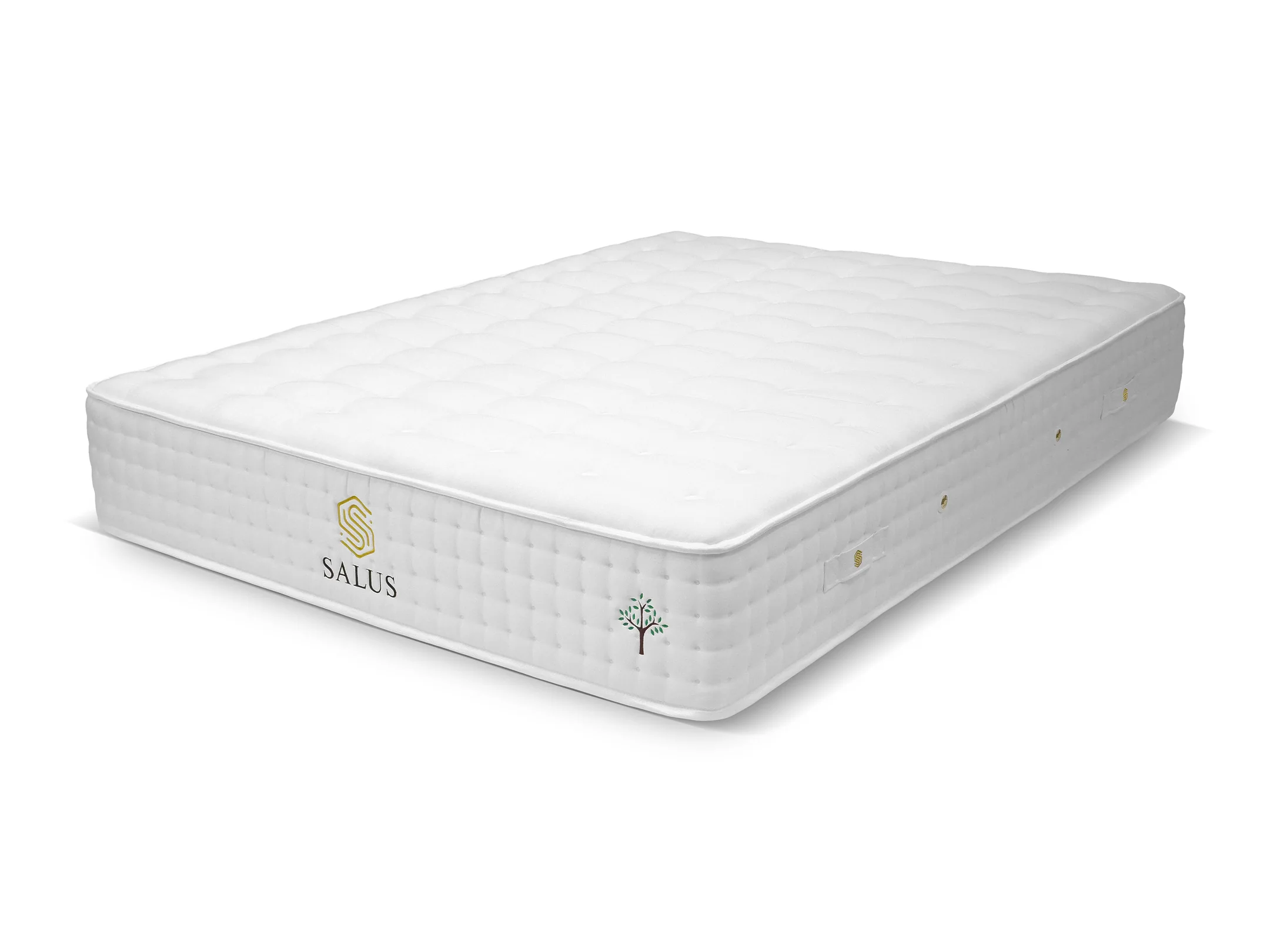
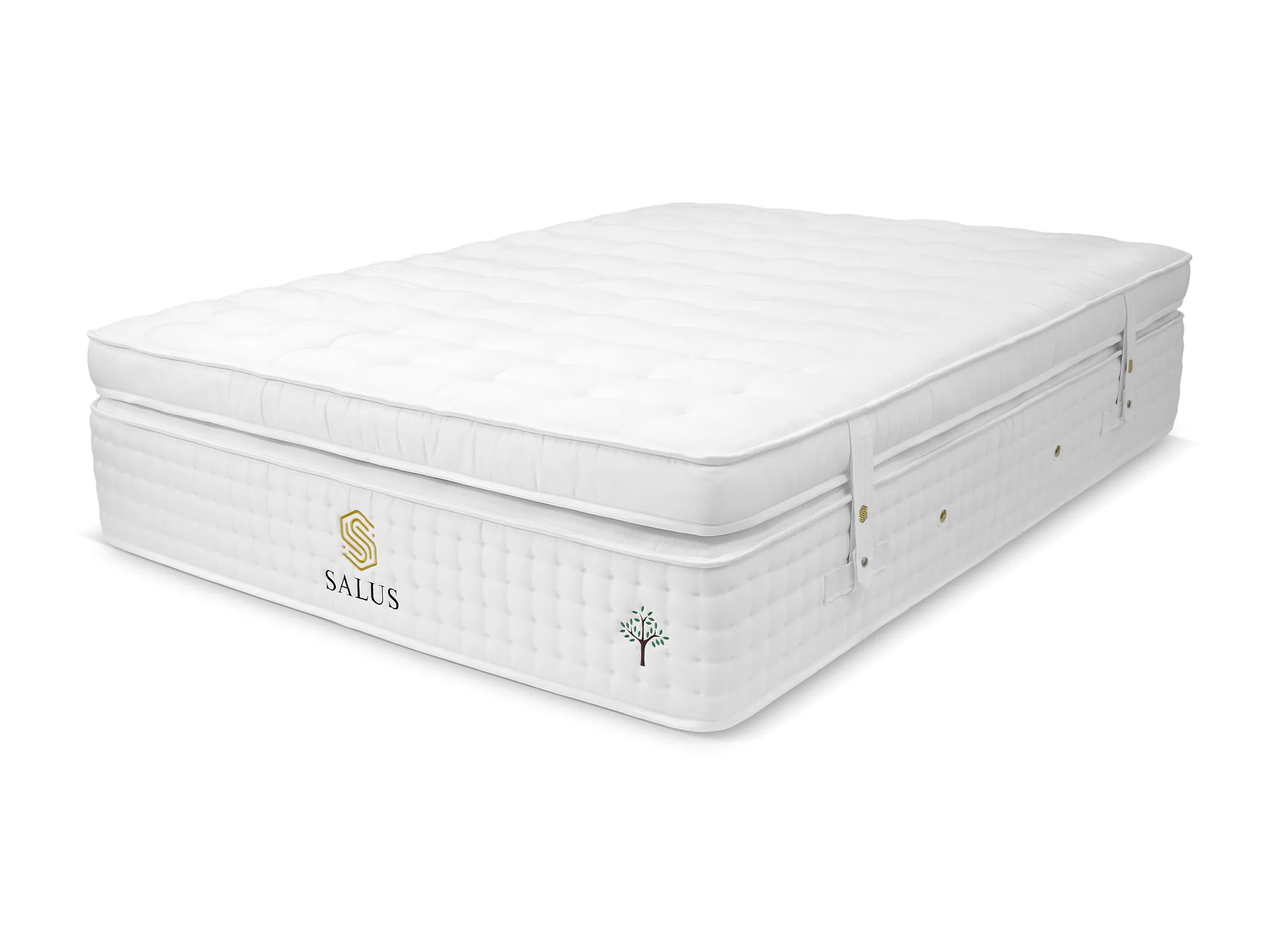
Compression does not damage the foam or the springs. A rolled mattress recovers its full height within a few hours of being unrolled, and reaches its settled feel over the first few nights. Our Salus range, and some of the deeper builds, ship flat instead — some constructions are better not compressed, and we would rather ship a bigger package than a worse mattress.